Healthcare Directory | Healthcare Marketing Service
This Page Modified | 3rd Oct 2026 at 6:46pm
Find Trusted Clinic Providers in Our Healthcare Directory
Our healthcare directory brings together clinic providers across a wide range of localities, so patients can compare services, locations, and access details in one place. It is built for people who want a quicker way to find private clinics, specialist treatment sites, and professional support without trawling through scattered search results. Each listing is designed to help visitors understand what the clinic offers, where it is based, and how it may suit their needs.
For healthcare marketing teams, a directory listing is also a practical way to improve online visibility. A well-structured clinic profile can support local SEO, strengthen brand credibility, and give search engines clear entity signals around the service, location, and practitioner type. This matters for answer engines too, because they look for concise, factual, and well-organised content when surfacing useful results for people searching by condition, treatment, or postcode.
How Clinic Listings Support Patient Choice
Clear Service Information Helps People Decide Faster
Patients usually want three things first: what the clinic does, where it is, and whether it is easy to reach. A strong clinic listing answers those questions quickly, using plain language and practical detail. That might include the treatment type, the clinic environment, parking access, wheelchair access, or the nearest station. When this information is easy to scan, people are more likely to trust the page and take the next step.
From a marketing perspective, this is more than convenience. Search intent is often highly specific in healthcare, especially for local treatment searches such as microsuction, audiology, private GP services, or diagnostic appointments. A directory page that matches that intent can improve click-through rates and make the service easier to understand before a patient arrives on the site.
Trust Signals Should Be Visible and Factual
Effective clinic listings usually include experience-based details such as practitioner expertise, service scope, clinic setting, and practical access notes. These are the kinds of trust signals that support E-E-A-T, because they show the visitor that the provider is real, professional, and relevant to their needs. Avoid vague claims and keep the wording grounded in what a patient can actually verify.
Healthcare Marketing Benefits for Directory Visibility
Directory pages can support a wider healthcare marketing service by giving each clinic a dedicated, indexable location page with local relevance. This helps when you want to target search demand in a specific town, borough, or district. It also gives your content team a reliable framework for internal linking, service page structure, and local discovery across multiple treatment locations.
For answer engine optimisation, the value lies in clarity. Machine systems tend to reward pages that use explicit service names, location references, and practical attributes in a consistent format. A directory entry can therefore act as a structured citation point for the clinic, especially when it includes the provider type, treatment name, area served, and access notes in a way that is easy to interpret.
Used properly, the directory becomes more than a list. It becomes a discoverability asset that supports brand search, local search, and patient navigation. It can also help content planners organise their service architecture so that each clinic page serves a distinct intent rather than repeating generic promotional copy.
What Makes a Useful Clinic Profile
Focus on Details Patients Actually Need
A useful clinic profile should answer the practical questions that matter before someone books. That means including the treatment offered, the location name, the area served, accessibility information, and any useful travel guidance. Patients often want to know whether there is ground-floor access, nearby parking, or a station within walking distance. These details reduce friction and improve confidence.
- A clear service description that explains the treatment in everyday language, without unnecessary jargon or inflated claims.
- The clinic location and the local area it serves, so people can judge whether the appointment is convenient for them.
- Accessibility notes, such as lift access, disabled parking, or ground-floor rooms, where these are genuinely available.
- Travel guidance that helps patients plan, including station proximity, parking type, or simple directions.
- Professional credibility indicators, such as specialist training, clinical focus, or relevant practitioner experience.
When these elements are present, the profile works harder for both users and search engines. It becomes easier to understand, easier to trust, and easier to match to a specific local search query.
Directory Content That Supports Local Search
Local search performance in healthcare depends on relevance, consistency, and location detail. A directory listing can reinforce all three if it uses accurate place names, treatment terms, and clinic identifiers in a natural way. This is particularly important for searches that include a town, postcode area, or neighbourhood. Search engines and voice assistants often prefer content that states the service and location plainly, without hidden assumptions.
A good listing also helps with entity recognition. If the page clearly names the treatment, the clinic, and the area, it gives systems a better chance of understanding what the page is about. That can improve visibility for both branded and non-branded searches, especially when users are looking for private healthcare services close to home. Structured, fact-led copy is also more likely to be quoted or summarised by AI Overviews and similar answer experiences.
For healthcare organisations, the practical aim is simple, make each page distinct, accurate, and easy to cross-reference. That supports stronger local presence while keeping the user experience straightforward.
Why Accessibility Details Matter on Clinic Pages
Access Information Can Influence Booking Decisions
Accessibility is one of the most important details a clinic can publish in a directory entry. Patients may need to know about ground-floor access, wheelchair lifts, disabled parking, step-free entry, or the layout of the building before they feel able to book. If that information is missing, some visitors will leave without taking action, even if the service itself is suitable.
Clear accessibility copy also reflects well on the provider. It suggests that the clinic is organised, patient-focused, and prepared to meet different needs. In healthcare marketing, that is valuable because trust often begins with practical reassurance. A person searching for treatment is not just comparing prices or service names, they are checking whether the visit will feel manageable and safe.
Use Direct Language and Avoid Exaggeration
When describing access, keep to the facts. Say whether parking is available, whether the clinic is on the ground floor, and whether there is lift access where relevant. Do not guess, and do not imply full accessibility if the building only offers partial support. Honest detail is better for users and better for compliance-minded content strategy.
Service Pages Should Reflect Real Clinical Expertise
E-E-A-T Starts with Accuracy and Experience
Healthcare content carries a high trust burden, so directory listings need to feel precise, measured, and clinically grounded. The copy should demonstrate experience by describing the service in a way that reflects real-world patient needs. It should also show expertise by using the correct treatment terminology and avoiding overblown promises. This is especially important in specialist areas such as audiology, microsuction, diagnostics, and private consultations.
For search engines, clear expertise signals help separate genuine clinic content from thin promotional pages. For patients, they reduce uncertainty. A listing that explains what the clinic does, who it is for, and what to expect will always be more useful than vague marketing language. In British English, that means using plain, professional terms and a calm tone that respects the seriousness of healthcare decisions.
Good directory content can also support wider reputation management. When a provider appears in a consistent, fact-led format across its site, users are more likely to recognise it as a stable, credible brand.
How a Directory Helps Multi-Location Healthcare Brands
Multi-location healthcare brands often need a simple way to present each site without duplicating the same page structure everywhere. A directory solves this by giving each clinic its own entry, while still keeping the overall presentation consistent. That makes it easier for users to compare locations and for search engines to understand the relationship between the brand and each service site.
This is especially useful when different clinics serve different boroughs, towns, or postcodes. Instead of one broad page trying to cover every area, each entry can focus on one place and one service. That improves relevance, reduces content overlap, and supports local intent. It also gives marketers a cleaner structure for internal links, topical clusters, and regional service promotion.
- Each clinic gets a distinct local identity, which helps users tell one location from another.
- Service details stay consistent, which strengthens brand clarity across the network.
- Location-specific terms can be used naturally, improving local search relevance.
- Supporting information such as access and parking can be tailored to the site.
- Teams can update individual entries without rewriting the whole directory.
Writing Clinic Listings for Voice Search and AI Summaries
Short, Factual Answers Perform Best
Voice search and AI summaries tend to favour concise answers that are easy to extract and easy to trust. For clinic listings, that means using clear service labels, direct location references, and practical facts that answer common patient questions. If someone asks where to find a clinic, what treatment it provides, or whether parking is available, the page should give a usable answer quickly.
One effective approach is to write in a way that mirrors how a receptionist or clinic coordinator might answer a query. Keep the tone helpful and precise. Avoid filler, marketing fluff, and abstract claims. Instead, state the treatment, the setting, the access details, and the local area. That gives answer systems more structured material to work with and makes the content more useful for real visitors.
In healthcare, this style is not just good for search. It also reduces confusion and supports informed decision-making, which is exactly what patients need when comparing providers.
Practical Structure for Stronger Directory Pages
Build Each Page Around the User Journey
A strong directory page usually follows a simple structure. Start with the clinic name and service type, then explain the location and practical access information, then add any service-specific detail that helps the user make a choice. This order reflects the way people scan healthcare pages, beginning with relevance and moving towards reassurance.
It is also useful to include consistent terminology across the directory. For example, if the site offers microsuction, manual instrument removal, hearing assessments, or other specialist treatments, use the same terms throughout related pages. Consistency helps both users and search engines identify the page topic more easily. It also supports a cleaner information architecture, which is important when you are managing multiple local clinic entries.
Keep Each Page Distinct Without Changing the Core Pattern
Every clinic profile should feel specific to its own setting, even when the layout is standardised. Add local access notes, nearby transport details, and the particular service offering where relevant. That preserves uniqueness while keeping the directory easy to navigate and maintain.
What Patients Expect from a Healthcare Directory
Most patients do not want to read long marketing copy before they book. They want quick, dependable information that helps them decide whether a clinic is suitable. A healthcare directory should therefore make it easy to compare services, understand location, and identify access features. That includes practical details such as whether the clinic is close to public transport, whether parking is available, and whether the premises are step-free or on the ground floor.
Patients also expect honesty. They do not need exaggerated language or broad claims that sound polished but tell them very little. They need clarity about the treatment and the setting. In that sense, a directory page is both a service page and a trust page. It should reassure the visitor that the provider is professional, the information is current, and the service is relevant to their need.
For healthcare marketing teams, meeting those expectations can improve engagement, reduce bounce, and create a stronger path to booking or enquiry.
Using Clinic Directories to Support Patient Journeys
From Search to Visit, Every Step Should Feel Easy
A well-managed clinic directory helps patients move from search to appointment with less effort. It gives them enough detail to decide whether the clinic is suitable, and enough context to plan the visit. That means the page should support the entire journey, from the first query through to arrival at the practice. When done well, the directory reduces uncertainty and makes the service feel more approachable.
This matters in healthcare because many users are already dealing with discomfort, anxiety, or time pressure. They do not want to decode complicated site architecture. They want a straightforward answer and a reliable next step. A directory that presents services, locations, and access notes clearly can make a real difference to that experience.
For brands, the benefit is equally practical. Better-organised content is easier to maintain, easier to update, and easier for search systems to surface when people ask location-based healthcare questions. That makes the directory a useful part of a wider digital marketing strategy, not just a list of pages.
Find your ideal health clinic with our list of trusted clinic providers:

Ashford: Private Microsuction Ear Wax Removal in Ashford Tn24
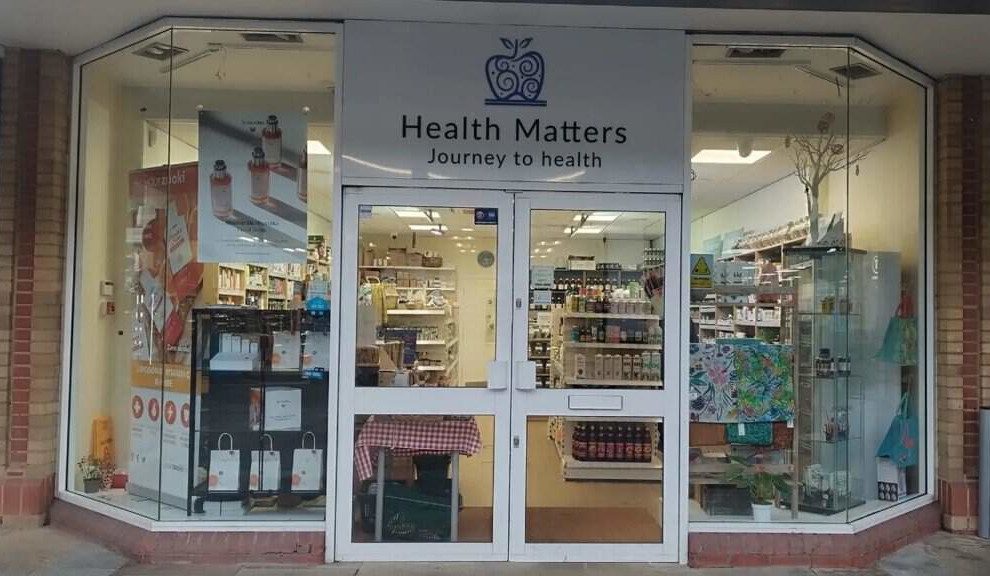
Barnet: Private Microsuction Ear Wax Removal in Barnet En5
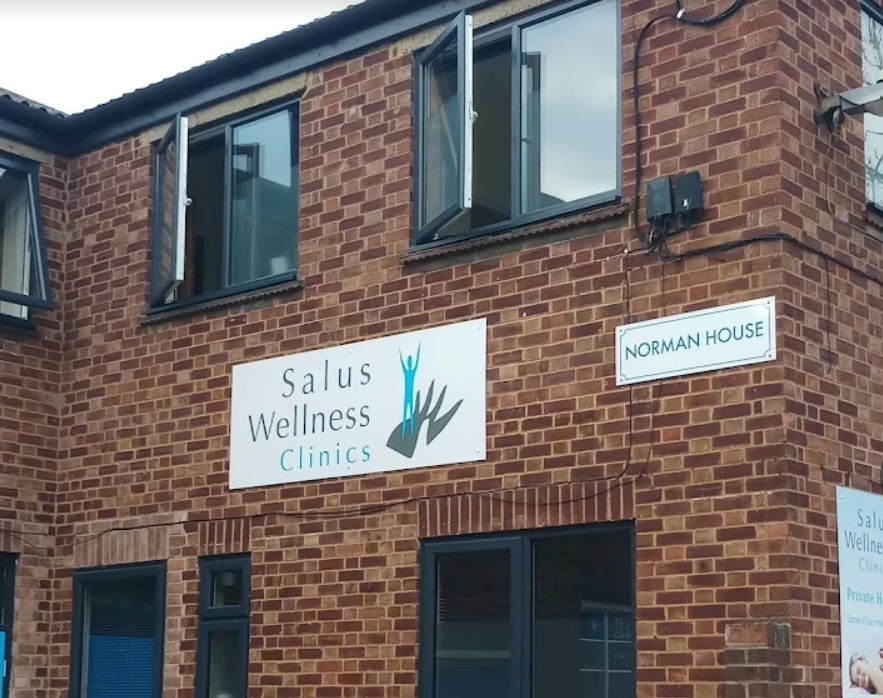
Cambridge: Private Microsuction Ear Wax Removal in Cambridge Cb2
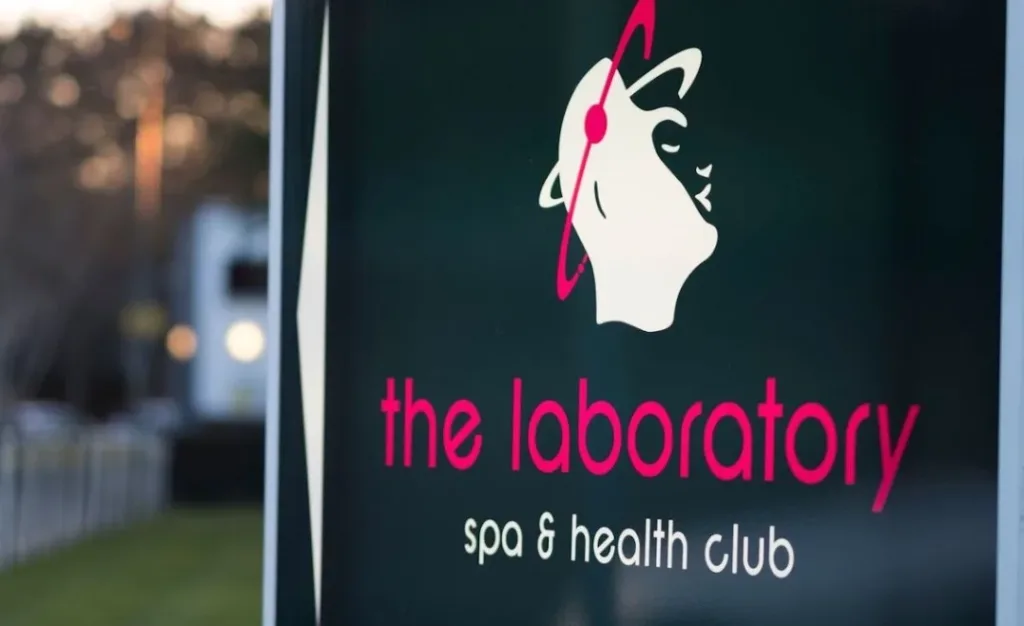
Colindale: Private Microsuction Ear Wax Removal in North West London Nw4
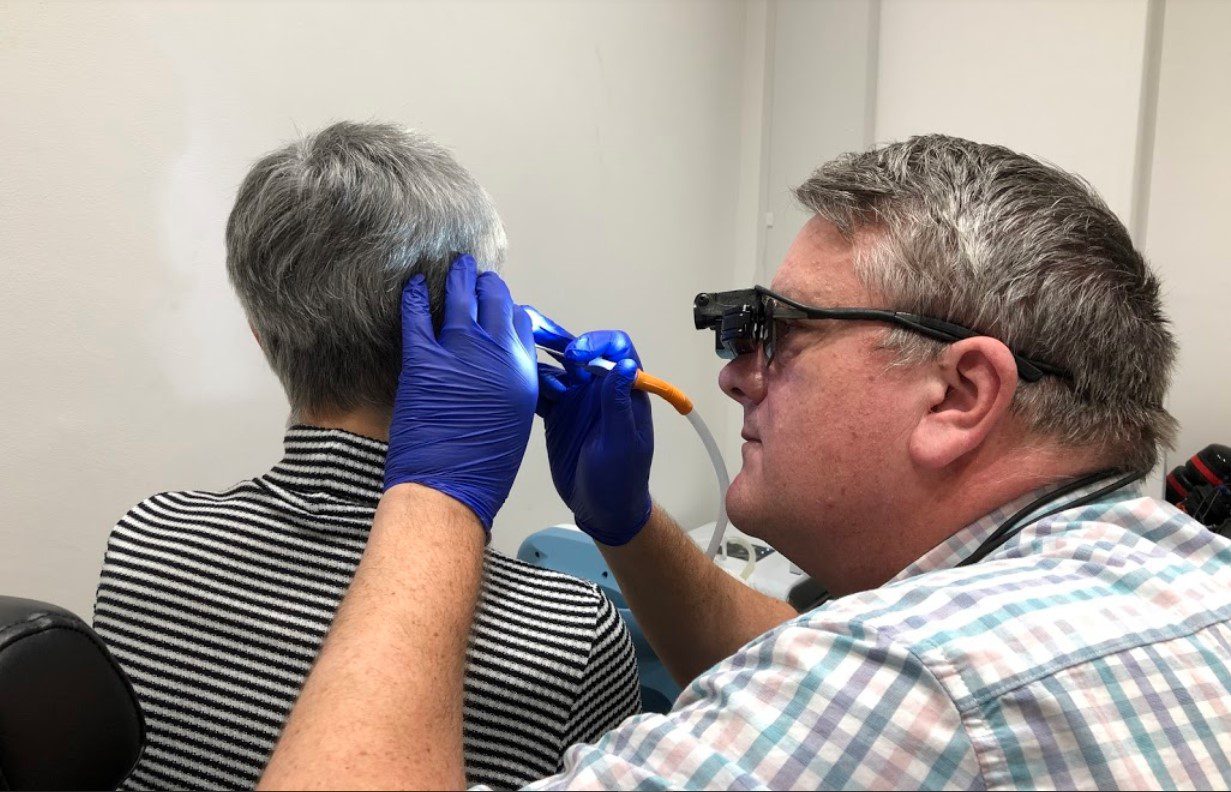
Ealing: Private Microsuction Ear Wax Removal in Ealing W5
East Finchley: Private Microsuction Ear Wax Removal in East Finchley N2
Edgware: Private Microsuction Ear Wax Removal in North London Nw4
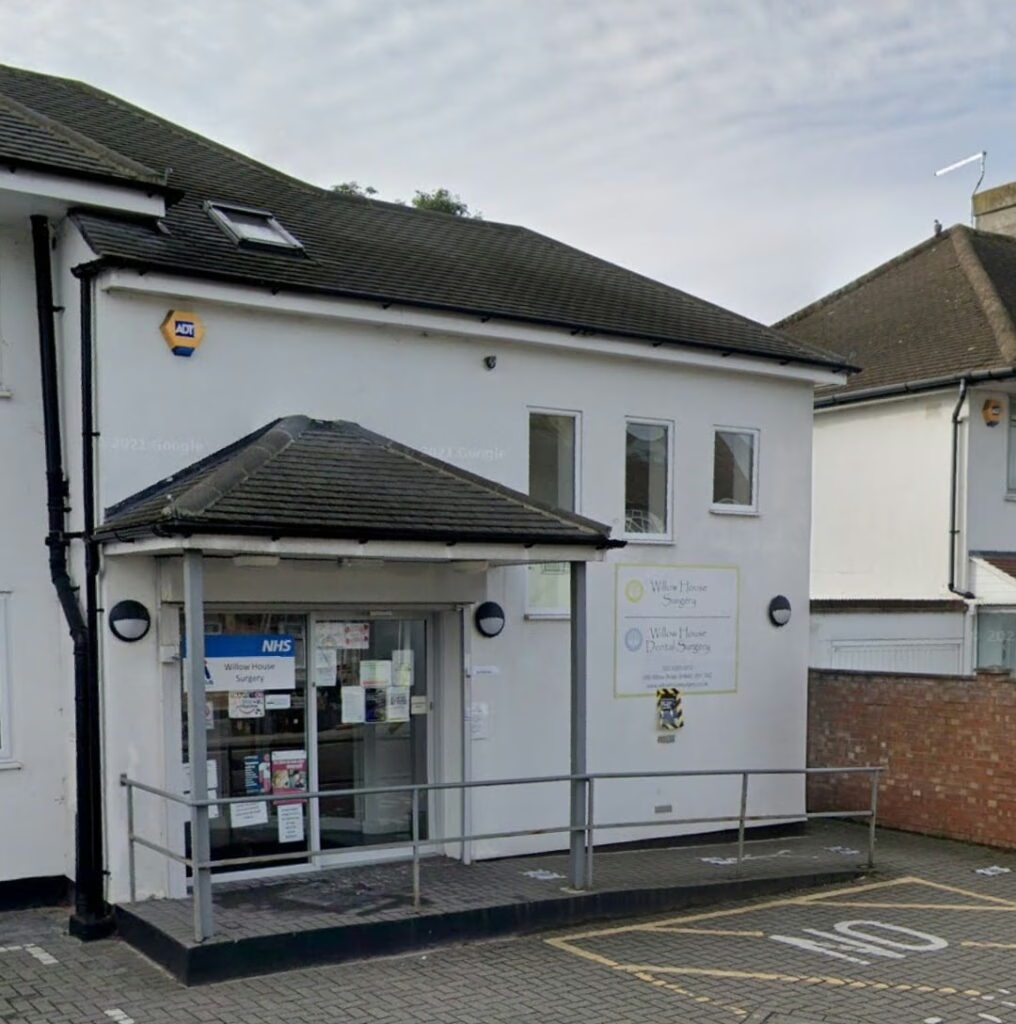
Enfield: Private Microsuction Ear Wax Removal in Enfield En1
Finchley: Private Microsuction Ear Wax Removal in Finchley North London
Hastings: Private Microsuction Ear Wax Removal in Hastings Tn34
Hendon: Private Microsuction Ear Wax Removal in North West London Nw4
Hythe: Private Microsuction Ear Wax Removal in Hythe Ct21
Kingston: Private Microsuction Ear Wax Removal in Kingston-Upon-Thames Kt6
Mill Hill: Private Microsuction Ear Wax Removal in North West London Nw4

Milton Keynes: Private Microsuction Ear Wax Removal Mk in Bucks Mk2
Muswell Hill: Private Microsuction Ear Wax Removal in Muswell Hill N2

Oxford: Private Microsuction Ear Wax Removal in Oxford Ox2
Reading: Private Microsuction Ear Wax Removal in Reading Rg30

St Albans – Private Microsuction Ear Wax Removal in St Albans Al1
Surbiton: Private Microsuction Ear Wax Removal in Surbiton Kt6

Watford: Private Microsuction Ear Wax Removal in Watford Wd3

Welwyn Garden City: Private Microsuction Ear Wax Removal in Welwyn Al8
Why a Clinic Directory Strengthens Healthcare Marketing
A healthcare directory gives marketers a scalable way to publish location-led service pages that are useful to both users and search engines. It helps create clarity around each clinic, supports local visibility, and provides a consistent home for practical details that matter to patients. In a competitive sector, that structure can be a real advantage.
It also supports credibility. When a directory is well written, factually accurate, and easy to scan, it reflects a professional brand that understands patient needs. That is important in British healthcare marketing, where trust, compliance, and clarity are central to performance. Whether the goal is local discovery, branded search, or AI-powered answer visibility, the directory can play a central role.
Useful directory content should be specific, accurate, and easy to act on. If a visitor can understand the service, the location, and the access details in one pass, the page is doing its job well.