
Where To Park For Hearing First Cambridge
Page Modified on 2nd Oct 2026 at 12:48pm
Waxfree Guarantee™: The only ear wax removal clinic in Cambridge offering the Waxfree Guarantee™.
We’re the only specialist microsuction ear wax removal clinic in Cambridge providing Microsuction Earwax Removal and Manual Instrument Earwax Removal by our expert Audiologists. All of our earwax removal practitioners are hand-picked by our founder, Jason Levy. We really are the ear wax removal experts in Cambridge.
Hawkinge, Lenham, Brabourne Lees, Hinxhill, West Brabourne, Westwell, Our convenient location in Cambridge, Kennington, Repton Manor, Lympne, Boughton Lees, Kempe’s Corner, Folkestone, The Forstal, Chilmington Green, Bonnington, Eastwell, Elham, Wye, Hythe, Kent, Dymchurch, also serves Willesborough Lees, other towns and villages in Kent., Biddenden, Westwell, Woodchurch, Dover and New Romney, Ram Lane, Godinton, Challock, Hothfield, Canterbury, Petham, Mersham, Bethersden, Wye, Barham, Repton Park, Brook, Leaveland, South Willesborough, Maidstone, Chilham, Kingsnorth, Daniel’s Water, Beaver Green, Shadoxhurst, Smeeth, Hamswtreet, Smarden, Cheeseman’s Green, Smarden, Newtown, Great Chart, Newington, Denton, Tenterden, Sheldwich, High Halden, Singleton, Aldington, as well as Charing
Parking Options for a Hearing First Visit in Cambridge

Car Parks Near Hearing First Cambridge
- Estacionamiento, approximately 0.6 miles from Hearing First Cambridge. View on Google Maps.
- YourParkingSpace, approximately 0.4 miles from Hearing First Cambridge. View on Google Maps.
- parking cambridge, approximately 0.4 miles from Hearing First Cambridge. View on Google Maps.
Parking information and place links are provided by Google Maps. Check restrictions and charges locally.
If you are heading to Hearing First in Cambridge, it usually helps to arrive a little early and use the parking arranged for the clinic site, rather than circling for a space on the street at the last minute. Cambridge roads can become busy at peak times, so having a plan in place can take some of the tension out of a visit for microsuction, manual ear wax removal, or an audiology consultation. If someone is coming with you, it is sensible to think in advance about whether they will wait in the car park or close by while you are inside. That is especially useful for anyone with reduced mobility, a blocked ear, or a same-day ear cleaning appointment. Free on-site disabled parking is particularly helpful because it allows patients to park nearer the entrance and avoid a longer walk. Even so, it is wise to leave extra time for traffic, turning into the site, and finding the correct bay, so you can arrive settled rather than flustered.
Ways to Arrive More Calmly
It is worth thinking about your route, the time you are travelling, and whether you will need support getting from the car to reception. If you are travelling from central Cambridge, congestion, school traffic, and temporary roadworks can each add a few minutes. Building in a short buffer also helps if you need to gather paperwork, use walking aids, or help someone who finds clinic visits tiring.
Accessible Spaces and Entry for Patients

Published Accessibility Features
- Wheelchair-accessible entrance
- Wheelchair-accessible parking
Accessibility details are provided by Google Maps. Contact the location to confirm individual requirements.
For many patients, accessible parking is the deciding detail when arranging ear wax removal in Cambridge. A disabled bay close to the building can make the whole visit feel easier, particularly if you live with balance problems, vertigo, hearing loss, or discomfort from a wax blockage. It can also be helpful if you are attending with a carer or relative who needs to assist you at the door. Before you set off, it makes sense to check the current parking arrangement and any site rules, since layouts can change. If you use a blue badge, have it ready and display it properly. The aim is a straightforward arrival, not a hurried one, and fewer delays before microsuction or manual instrument treatment. A calmer start often makes the appointment feel less demanding, especially if this is your first time at an audiology clinic.
Things Worth Checking Before You Travel
- Keep your booking details close at hand, so any question about arrival can be answered quickly if you need to speak to the clinic team.
- Bring a blue badge if you rely on accessible parking, and place it where it can be clearly seen from outside the car.
- Consider whether you need a drop-off point for a companion, walking frame, or mobility aid before you park.
- Give yourself a few extra minutes if you are not familiar with Cambridge roads, because traffic can change quickly by the time of day.
- Make sure your appointment time allows enough room for parking, walking in, and any check-in steps you may need to complete.
Safe, Comfortable Ear Wax Removal with an Audiologist in Your Local Area
Your ears and hearing are delicate, so their care should be in expert hands. Some providers delegate ear wax removal to lay people, treating it as a routine procedure. However, we believe it calls for the skill and judgement of a trained Audiologist.
At our clinic, only qualified Audiologists perform ear wax removal, ensuring that your ears are looked after by a specialist with detailed knowledge of ear anatomy and physiology. This helps minimise the risk of injury and supports a safe, effective procedure tailored to your needs. Your hearing is too important to leave to chance, and we are committed to providing the highest standard of care.
Hearing First Cambridge – Microsuction Ear Wax Removal Cambridge Cb2 Map
Choosing the Best Parking Plan for Ear Wax Removal
The right parking choice depends on your mobility, how long your appointment is likely to take, and whether you are attending for one ear or both. Some people need only a short visit, while others may need time for assessment, explanation, and aftercare guidance. If you are booked for ear wax suction, it is usually wiser to take the nearest legal space available than to keep driving around in search of the perfect one. That simple choice can reduce anxiety and lower the chance of missing your slot. If you are sensitive to pressure in the ear canal, arriving unhurried can help the appointment begin on a better note. When a companion is driving, agree in advance where they will wait and how you will meet up after the visit. It is also sensible to remember that nearby streets may have restrictions, loading rules, or time limits, so always check the signs before you leave the vehicle.
Parking Decisions That Can Save You Time
- Choose the closest suitable bay first, especially if walking distances are difficult or you feel unsteady on your feet.
- Allow a few extra minutes for turning into the site, finding the entrance, and reaching reception without rushing.
- If someone is driving you, agree whether they should stay nearby or park and return later, so you both understand the plan.
- Read local signage carefully, because permit areas, disabled bays, and short-stay rules can all be enforced differently.
- Keep your booking details handy, so any arrival question can be answered quickly if you need to speak to the clinic team.
Our Ear Wax Removal Services

- Manual Instrument Ear Wax Removal
- Microsuction Ear Wax Removal
Hearing First Cambridge
URL: https://www.hearingfirst.co.uk/book-ear-wax-removal-near-me/book-microsuction-ear-wax-removal-cambridge/
Professional ear wax removal Cambridge Audiologists. Conveniently located in Cambridge Clinic on Sun Lane, with free on-site disabled parking. We are the only ear wax removal clinic in Cambridge that offer The Hearing First Waxfree Guarantee™ , so if you have a blocked ear, come to our ear wax removal Cambridge clinic. We really are the ear wax removal experts in Cambridge.
Parking and Ear Wax Removal in Cambridge
For visitors seeking ear wax removal in Cambridge, the clinic is on Sun Lane and offers free on-site disabled parking. That can make the journey easier for patients who have mobility needs or would benefit from parking close to the appointment location. If accessible parking matters to you, it is sensible to confirm availability before you travel.
The clinic provides two specialist ear wax removal methods, microsuction and manual instrument removal. An Audiologist can assess the ear and decide which approach may be most suitable in the individual case, helping you make an informed choice when arranging support for a blocked ear, reduced hearing or ear wax build-up.
- Plan your journey to the Cambridge clinic on Sun Lane.
- Allow enough time to park and arrive calmly for your appointment.
- Contact the clinic in advance if you need to discuss disabled parking or access requirements.
- Ask which ear wax removal method may be appropriate for your needs.
Bringing Parking into Your Hearing Care Plans
When you are organising hearing care, parking should be part of the plan rather than something you think about at the last minute. A smooth arrival matters if you are attending for hearing loss checks, wax build-up, or advice from an audiologist. Many patients feel more settled when they know exactly where they will park, how far they will need to walk, and whether disabled access is close by. That is especially helpful if you are fitting the appointment around work, childcare, or a tight schedule in Cambridge. If you are driving at a busy time, it is sensible to think about the journey home as well, because leaving can take longer than expected. A clear plan means you can focus on the appointment itself, rather than worrying about whether the car is safe, legal, or too far away. For anyone using mobility aids, this kind of preparation can make a real difference to comfort and confidence on the day.
Practical Arrival Tips for Patients and Companions
Have your parking payment method, badge, or site permission ready if it will be needed. If you are travelling with another person, ask them to note the car position in case you leave by a different exit. Small steps like these can remove avoidable pressure before an ear wax removal appointment.
What to Do If You Run Late
If traffic starts to build, it is better to contact the clinic promptly than to risk a hurried park. Safe parking, especially around a medical appointment, is worth a few extra minutes. That applies to microsuction, manual removal, and general audiology visits alike.
Further Information
You can find more information about finding ear wax removal in Cambridge here.
When Parking Matters Most for Blocked Ears

People with blocked ears often feel uncomfortable, distracted, or slightly off balance, so the parking experience should support a calm clinic visit. If you have hearing loss from wax build-up, you may already be concentrating hard on road signs, directions, and navigation. In that situation, a nearby parking space can reduce strain before the consultation even begins. It also helps if you are bringing a partner or family member who can guide you to the entrance. Some patients prefer to visit after work or between other commitments, which makes reliable parking even more important. The nearer and easier the parking, the less likely you are to arrive flustered. That matters because the appointment may include questions about symptoms, past ear problems, or previous treatments. A steady start makes it easier to take in advice, ask questions, and understand the next steps after your ears have been examined and treated.
Signs That You Should Allow Extra Time
- You have not visited the Cambridge site before, so you may need longer to identify the correct entrance and parking area.
- You are travelling during rush hour, when short journeys can take longer than expected across the city.
- You feel unwell from pressure, tinnitus, or a heavy blocked-ear sensation, so a rushed arrival would make things harder.
- You have mobility limitations, which means parking close to the building will make the visit safer and less tiring.
- You are attending with a companion or carer, and both of you need time to park, walk in, and settle before the appointment.
What Good Parking Looks Like for an Audiology Visit
Good parking for an audiology appointment is simple, legal, and close enough to the entrance that you do not have to rush. It should also be easy to understand, especially if you are visiting for the first time. In practical terms, that means checking whether you need an accessible bay, a standard space, or a short-stay option, then allowing time to walk in comfortably. Patients attending for ear wax removal often appreciate parking that supports privacy too, because no one wants to spend ages searching the area while already thinking about treatment. Clear directions, sensible time planning, and a calm approach all help. If you are unsure about a site rule or access issue, asking before you travel is better than guessing on the day. The less friction there is at arrival, the easier it is to focus on the consultation, the examination, and any advice about aftercare or follow-up.
Small Details That Improve the Visit
Match Your Timing to the Appointment Type
Microsuction, manual ear wax removal, and assessment appointments can all take different amounts of time, so your parking plan should match the length of the booking. If you expect the visit to be brief, you still need enough time to park properly and settle yourself before going in.
A Useful Rule for First-Time Visitors
Assume Cambridge traffic will take a little longer than the sat nav predicts, then add a buffer on top. That simple habit usually makes parking feel far less pressured.
Why the Buffer Helps
An extra ten minutes can be the difference between arriving calmly and circling the area while worrying about your slot.
What Does Ear Wax Removal in Cambridge Cost?
Published Payment Methods
- Credit cards
- Debit cards
- Contactless or NFC payments
Payment information may change. Confirm prices, insurance eligibility and accepted methods directly with the provider. Place attributes are provided by Google Maps.
Ear wax removal in Cambridge starts at £34. Pricing can vary depending on whether it is one or two ears, how far in advance the booking is made, and whether the appointment falls at peak or off-peak times.
28 Interesting Facts About Cambridge

- Fitzwilliam Museum: Founded in 1816 from the bequest of Richard FitzWilliam, the Fitzwilliam Museum holds internationally important collections of art, antiquities and manuscripts.
- The Round Church: The Church of the Holy Sepulchre, commonly called the Round Church, is one of only four medieval round churches surviving in England and was built around 1130.
- Great St Mary's: Great St Mary's, on Senate House Hill, has served as Cambridge's civic church since the Middle Ages and its tower provides views across the city centre.
- St Bene't's Church: St Bene't's Church contains a late Anglo-Saxon tower dating from about 1020, making it the oldest surviving building in Cambridge.
- Cambridge Castle Mound: Cambridge Castle was begun by William the Conqueror in 1068, and its earthwork motte remains beside Castle Hill despite the loss of most of the fortress.
- Hobson's Conduit: Completed in 1614, Hobson's Conduit brought clean water from springs at Nine Wells into Cambridge and still runs through parts of the city.
- Cambridge Market Square: Market Square has been used for trading since the Middle Ages and continues to host regular stalls in the heart of Cambridge.
- Home to the Second-Oldest University in the English-Speaking World
writers, Founded in 1209, scientists, world leaders — and remains one of the most prestigious institutions globally., and the University of Cambridge has educated monarchs - Over 100 Libraries Belong to the University
Cambridge University has more than 100 libraries, including the iconic University Library, which houses over 8 million books and receives a copy of every UK publication. - Eight Prime Ministers Studied Here
Cambridge has educated eight British Prime Ministers, Britain’s first official PM, more recently Stanley Baldwin and Neville Chamberlain., and including Sir Robert Walpole - The Best Ear Wax Removal In Cambridge
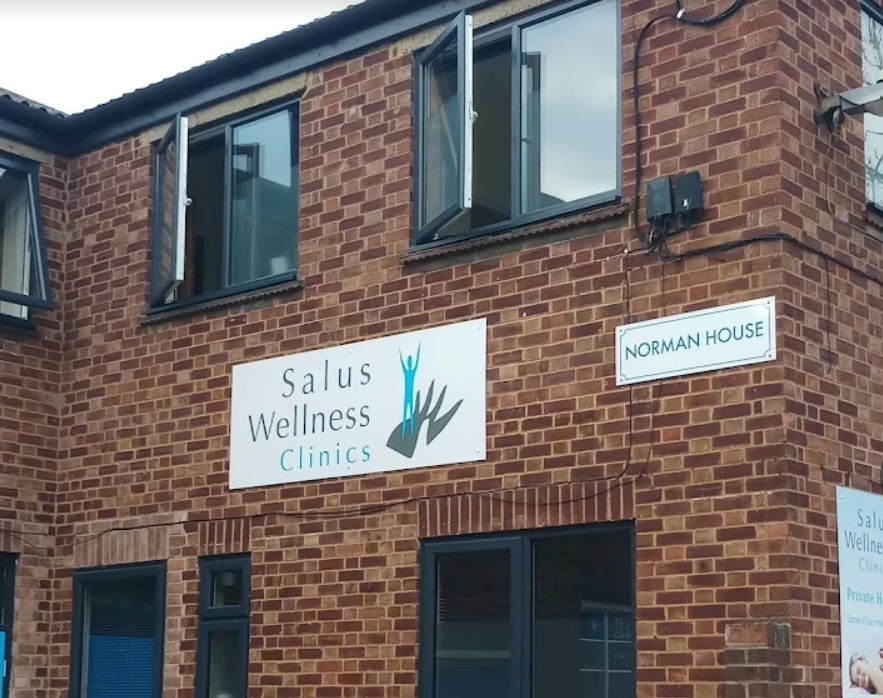
The UK’s premier ear wax removal and Audiology service, Hearing First, is available at Salus Wellness on Cambridge Place, just off Hills Road. You can click here to book an ear wax removal appointment in Cambridge with Hearing First. - Stephen Hawking Worked and Lived in Cambridge
The world-renowned physicist lived in Cambridge for most of his academic life and was Director of Research at the Centre for Theoretical Cosmology until his death in 2018. - The Rules of Football Were Codified Here
The Cambridge Rules, created in 1848, were an early attempt to standardise football and helped shape the modern game we know today. - Punting on the River Cam is a Local Tradition
Punting — pushing a flat-bottomed boat along the river using a pole — is one of Cambridge’s most iconic activities, particularly along the stretch known as The Backs, behind the colleges. - Cambridge Has Over 30 Colleges
each with its own history, Trinity, St John’s, and famous alumni. King’s, The University is made up of 31 autonomous colleges, and traditions are among the most recognisable. - Home to the Cavendish Laboratory
The Cavendish Laboratory, founded in 1874, is where many groundbreaking scientific discoveries occurred — including the structure of DNA by Watson and Crick in 1953. - First Computer Programmers Studied Here
father of computer science, Cambridge played a major role in early computing. Alan Turing, studied at King’s College, and the university remains a leader in AI research today. - Birthplace of the Hovercraft
Inventor Christopher Cockerell, who developed the hovercraft, was educated at Cambridge and conducted some of his early tests using a vacuum cleaner and kitchen scales. - Isaac Newton Studied and Taught at Trinity College
One of the greatest scientific minds in history, Sir Isaac Newton, formulated his laws of motion and gravity during his time in Cambridge, under the famous apple tree story. - Over 90 Nobel Prizes Have Been Awarded to Cambridge Affiliates
Cambridge University boasts over 90 Nobel Laureates across disciplines including literature, medicine, physics, and peace — more than any other university outside the US. - The Mathematical Bridge Has No Nails (Kind Of)
The Queen’s College Mathematical Bridge is a wooden structure famous for being held together by precision engineering — although modern nails have since been added during repairs. - Cambridge Has a Rich Literary History
Writers like Sylvia Plath, Zadie Smith, and A.A. Milne studied here. Lord Byron also famously kept a pet bear while at Trinity College because dogs were not allowed. - The Corpus Clock Tells Time — and Eats It
Installed in 2008, the Corpus Clock is a bizarre and beautiful creation featuring a metal “Chronophage” (time-eater) insect devouring time as it ticks. It’s both mechanical marvel and artistic metaphor. - Trinity College Owns Newton’s Apple Tree Clone
A tree grown from a cutting of Isaac Newton’s original apple tree stands in Trinity’s gardens — a living tribute to the moment that changed science forever. - Cambridge Is a Cycling Capital
Over a quarter of Cambridge residents cycle to work or school, giving it one of the highest cycling rates in the UK — and making bicycles a central part of its cityscape. - The First Colour Photo Was Developed Here
James Clerk Maxwell, who developed the first durable colour photograph, conducted part of his ground-breaking research in Cambridge in the 1860s. - Home to a Real-World Hogwarts-Style Dining Hall
resemble those in *Harry Potter* — with long wooden tables, portraits lining the walls., especially at Christ’s and Trinity, candelabras, and Many Cambridge college dining halls - The University Has No Central Campus
Unlike most universities, libraries, departments, student housing, and Cambridge is spread throughout the city. Its colleges are intertwined with the rest of Cambridge life.
Making the Journey to Hearing First Less Stressful

Travel stress can build quickly if you are managing directions, parking, and an ear problem all at once. The best way to ease that pressure is to plan the journey beforehand and keep the parking part as straightforward as possible. If you can, look up the area before you leave home, note the likely entrance, and decide whether accessible parking will be needed. For patients with reduced hearing, careful planning helps because you are less likely to miss instructions or waste energy dealing with uncertainty. It is also sensible to keep your mobile phone ready in case you need to update the clinic team about a delay. If you are travelling by car with someone else, decide who will handle parking and who will keep an eye on directions. That avoids confusion when you arrive. Once you have parked, take a moment to breathe, collect your things, and walk in at a steady pace. A calm arrival sets the tone for the appointment and makes the visit easier to manage.
Best practice is to treat parking as part of your care plan, not merely part of the journey. A safe, nearby space supports punctuality, comfort, and a better patient experience.